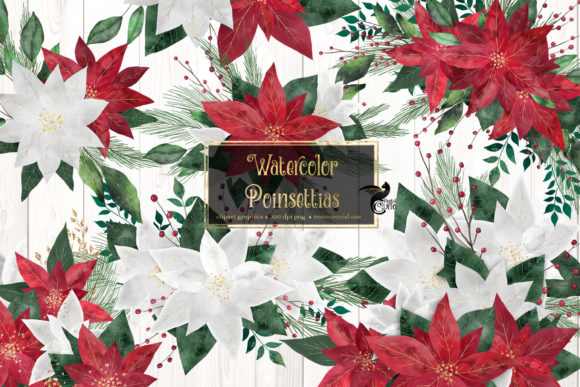
Watercolor Poinsettias Clip Art: A Designer Review
As someone who has spent years translating digital concepts into physical stitches, I approach every new asset with a mix of excitement and skepticism. The holiday season is approaching fast, and the demand for seasonal custom apparel and holiday embroidery is peaking. Recently, I came across a design file labeled Watercolor Poinsettias Clip Art. Before rushing to hoop it up for a client order or listing it in my Etsy shop, I needed to evaluate how this specific aesthetic translates from a screen to fabric. Does the soft, bleeding nature of watercolor hold up under the rigid logic of a machine embroidery design? Let's dive into what makes this piece work and where you need to be careful.
The First Impression: Mood and Visual Personality
At first glance, Watercolor Poinsettias Clip Art exudes a gentle, artistic charm that stands apart from the typical bold, solid-color vector graphics we often see in the industry. The mood is nostalgic and organic, capturing the fluidity of paint on paper rather than the sharp edges of standard clip art. This visual personality suggests a design that belongs on softer, more personal items. It feels less like a logo for a corporate event and more like a heartfelt touch for a personalized gift or a boutique home decor item.
However, as an experienced designer, I immediately start thinking about the technical translation. Watercolor effects rely heavily on gradients and transparency. In the world of embroidery files, we don't have true transparency; we have layers of thread. To mimic that watercolor look, the digitizer likely used varying densities of fill stitch and perhaps some strategic satin stitch for definition. The challenge here is maintaining that "soft" look without the stitching becoming muddy or overly dense, which can pucker delicate fabrics.
Real-World Application: From Screen to Sweatshirt
Let's imagine a real scenario. I have a client who wants a set of custom embroidered tote bags for a local artisan market. They want something festive but not tacky. I load the Watercolor Poinsettias Clip Art into my software and visualize it on a natural canvas tote bag. The contrast between the vibrant reds and greens of the poinsettia and the beige canvas looks promising. The organic shapes would sit beautifully on the textured surface of the canvas, giving the tote bag design a high-end, handmade feel.
This design also screams potential for sweatshirt embroidery. Imagine a cream-colored fleece pullover with this motif centered on the chest. The softness of the watercolor style complements the cozy texture of the fleece perfectly. Unlike a hard-edged geometric pattern, these flowers would add a whimsical, feminine touch that appeals to customers looking for unique handmade products. For an Etsy seller or small shop owner, this kind of aesthetic can significantly boost perceived value. Customers are willing to pay a premium for designs that look curated and artistic rather than mass-produced.
Beyond apparel, consider baby embroidery. A onesie or a receiving blanket featuring a smaller version of this design could be adorable. The soft colors and lack of harsh lines make it suitable for nursery decor. Similarly, for kitchen linens like tea towels or aprons, the floral theme fits naturally. It transforms a utilitarian item into a decorative piece, perfect for the holidays.
Navigating Challenges: Where Caution is Needed
While the potential is high, Watercolor Poinsettias Clip Art is not a one-size-fits-all solution. There are specific situations where this design requires extra attention or should be avoided entirely. The first concern is stitch density. To achieve a watercolor gradient, the digitizer may have packed many rows of fill stitch close together. If you attempt this on a thin fabric like a silk blouse or a lightweight t-shirt, the weight of the thread will distort the material, causing puckering that ruins the garment.
Hoop size is another critical factor. The intricate details of the petals and leaves might get lost if you try to scale the design down too much. If you are working with a small 4x4 inch hoop for a cap or a patch, the fine details could turn into a blob of thread. Always check the minimum recommended size before committing. Additionally, using this design on dark fabrics presents a color challenge. Watercolor effects often rely on white or light backgrounds to show the "bleeding" effect. On black fabric, you would need significant underlay or a different color palette strategy to ensure the design pops, which changes the original artistic intent.
Textured fabrics can also be tricky. While a canvas tote works well, highly textured materials like chenille or thick knits can interfere with the precision of the running stitch outlines often used to define the watercolor edges. The needle might skip, or the thread tension might vary, leading to an uneven finish. Finally, if you plan to use this for items that require frequent washing, such as baby clothes or dish towels, ensure the stabilizer choice is robust enough to prevent the dense areas from fraying over time.
Practical Notes for the Professional Maker
Before you finalize your embroidery project with Watercolor Poinsettias Clip Art, follow these practical steps to ensure success:
- Test on Scrap Fabric: Never skip the test run. Stitch the design on a scrap piece of the exact fabric you intend to use. Check for puckering, registration issues, and color blending.
- Review Thread Colors: The watercolor effect depends on the transition between shades. Ensure your thread colors match the design intent. Sometimes, swapping a bright red for a slightly muted burgundy can enhance the vintage watercolor look.
- Confirm Hoop Size and Stabilizer: Use a heavy-duty tear-away or cut-away stabilizer to support the fill stitch density. Make sure your hoop is large enough to capture all the detail without distortion.
- Check Licensing: As a commercial embroidery provider, always verify the license terms. Can you sell the finished product? Can you resell the digital embroidery file? Understanding these rules protects your business.
- Mockup Your Designs: Create a printable mockup to show clients how the design looks on different products. This helps manage expectations regarding the final finished product.
Final Verdict: A Valuable Asset for the Right Project
In conclusion, Watercolor Poinsettias Clip Art is a standout addition to any designer's library, provided it is used with intention. It elevates simple custom apparel into collectible art pieces and adds a touch of elegance to holiday gifts. It is particularly effective for small shop merchandise where uniqueness drives sales. However, it demands respect for its technical requirements. By carefully selecting your fabric, managing your stitch density, and testing thoroughly, you can harness the beauty of this design to create products that customers will love and cherish.
Whether you are creating an embroidered patch for a hat or decorating a pillow cover for a home decor line, this design offers a fresh alternative to the standard holiday motifs. It bridges the gap between digital illustration and tactile craft, proving that with the right technique, even the most fluid artistic styles can thrive in the structured world of machine embroidery.